
FREE CONSULTATIONS
8585-ADVICE


Recent Blog Posts
Is Possessing AI-Generated Child Porn a Criminal Offense in Maryland?

Possession, distribution, and production of child porn are criminal offenses with severe penalties in Maryland. However, in the age of AI, the landscape of pornography is rapidly shifting. For those accused of a crime related to child pornography, it's important to understand what the law will and will not tolerate.
If you're facing this kind of investigation in 2026, a Harford County, MD criminal defense attorney can explain what the facts of your case mean for you.
What Does Maryland's Child Pornography Law Prohibit?
Maryland Criminal Law Sections 11-207 and 11-208 make it a crime to knowingly possess, distribute, or produce a visual representation of a minor engaged in sexual conduct or sadomasochistic abuse. The laws do not require the image to be a photograph of a real child taken during actual abuse. This means that certain edited or computer-generated images, such as those created by AI, can be considered child pornography.
Can You Beat a Possession Charge if the Drugs Weren’t Found on You?
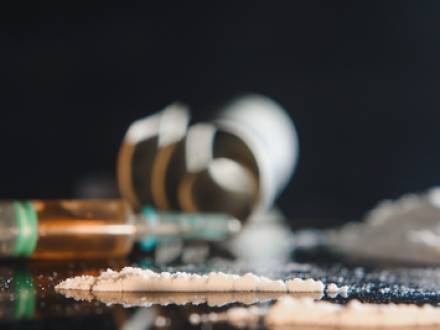 You can fight a possession charge whether the drugs were found on you or not. But a lack of actual possession can really help your case. Maryland requires prosecutors to show you actually knew about the substance and had control over it. That's a much tougher case to build when the drugs turn up in a shared car, home, or room instead of your own pocket.
If you're facing this type of charge in 2026, our Northern Baltimore County drug crimes defense lawyer can help you fight the charges.
How Is Drug Possession Proven Under Maryland Law?
Under Maryland Criminal Law Section 5-601, a person generally may not possess a controlled dangerous substance unless an exception applies. Maryland law defines possession as having actual or constructive control over something.
How Do I Prove Self-Defense in a Maryland Assault Case?
 You prove self-defense in a Maryland assault case by proving that you reasonably believed that you were in immediate danger when you defended yourself. There are nuances to this, such as proving that you used reasonable force, that can complicate your defense. That’s where an experienced attorney comes in.
If you're dealing with an assault charge in 2026, our Harford County, MD criminal defense lawyer can help you understand how to build a strong self-defense claim.
What Does Maryland Law Require to Prove Self-Defense?
Maryland's self-defense standard comes primarily from common law, meaning it has been shaped by court decisions rather than set out in a specific criminal self-defense statute. You generally need to show that you actually believed you were in immediate or imminent danger, that this belief was reasonable, that you did not start or provoke the confrontation, and that you used no more force than reasonably necessary to protect yourself.
What Do I Do if I’ve Been Falsely Accused of Rape in Maryland?
 If you've been falsely accused of rape in 2026, the most important step you can take first is to avoid speaking with police without an attorney present. These cases move quickly, and early mistakes can be hard to undo. Being falsely accused of something this serious can feel like your entire world has been turned upside down in an instant. The fear, anger, and confusion you're feeling right now are completely understandable. The Northern Baltimore County sex crimes defense lawyer at Baltimore Legal Services has helped over 10,000 clients fight the charges against them. He can help you, too.
Why Is It Important to Stay Silent With Police After a False Accusation?
It's natural to want to defend yourself right away and explain what really happened. But speaking with police without an attorney present is one of the most common mistakes people make after being falsely accused of any crime.
Can I Prove the Breathalyzer Was Wrong in a Maryland DUI Case?
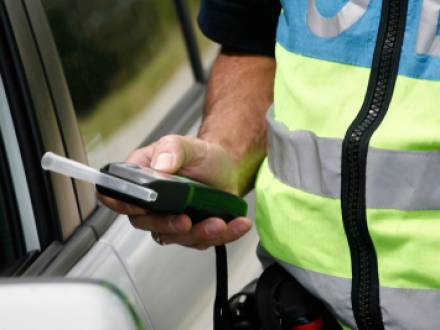 You can challenge a breathalyzer result in a Maryland DUI case, and doing so is one of the most effective ways to fight the charge. It’s a common misconception that a breath test result is solid proof that cannot be questioned. However, breathalyzer devices can produce inaccurate readings for several reasons. You have options for challenging those results in court. If you are facing a DUI charge in 2026, a Harford County, MD criminal defense lawyer can examine the evidence and find out whether the result in your case can be challenged.
Does Maryland Law Set Requirements for Breath Testing?
Under Maryland Transportation Article Section 16-205.1 and Maryland State Police regulations, breath testing in DUI cases has to follow specific procedures. Any deviation from these requirements is a potential basis for challenging the result.
How To Fight Burglary Charges in Maryland
 If you’ve been charged with burglary in Maryland, you still have the right to fight a conviction. The outcome of your case depends heavily on the evidence, how it was gathered, and the strength of your defense. If you are facing a burglary charge in 2026, a Northern Baltimore County criminal defense lawyer can look at every detail of your case and start building the strongest possible defense right away.
What Is Burglary Under Maryland Law?
Maryland law breaks burglary into different degrees depending on the circumstances:
-
First-degree burglary (Maryland Criminal Law Article § 6-202): This involves breaking and entering into a home with the intent to commit theft or a crime of violence inside. It’s the most serious burglary charge in Maryland and carries up to 20 years in prison.
Can You Be Charged With Distribution if No Drug Sale Occurred?
 You can be charged with drug distribution in Maryland even if no sale ever took place. Maryland law does not require money to change hands for a distribution charge to apply. Simply having drugs in an amount or arrangement that suggests you planned to share or hand them off can be enough. If you are dealing with this situation in 2026, a Harford County drug crimes defense lawyer can help you understand what the state is claiming and what you can do about it.
How Does Maryland Define Drug Distribution?
Under Maryland Criminal Law Section 5-602, it is illegal to distribute a controlled dangerous substance or to have one with the intent to distribute it. The word distribute covers more than selling. It includes giving drugs away, passing them to someone else, or even just having them in a form that suggests they were ready to be handed off. No money has to be involved for this charge to apply.
Field Sobriety Test Mistakes That Can Help Your DUI Defense in Maryland
 If you were arrested for DUI in Maryland after failing a field sobriety test, you may feel like the evidence against you is solid and that there is not much you can do. That is not necessarily true. Field sobriety tests are far less reliable than most people realize, and the way they are administered matters just as much as the results. When officers make mistakes during these tests or when outside factors affect your performance, the results can be challenged in court. If you are facing charges in 2026, our Northern Baltimore County DUI defense lawyer can help.
In Maryland, DUI charges are governed by Md. Code, Transportation Section 21-902, which makes it illegal to drive while under the influence of alcohol or while impaired. Police often use field sobriety tests to establish probable cause to arrest you, even before a breath or blood test is administered. That means the validity of those roadside tests can directly affect whether your arrest was lawful in the first place.
Can Domestic Violence Charges Be Dropped in MD if the Victim Changes Their Mind?
 In Maryland, the decision to pursue domestic violence charges belongs to the prosecutor, not the alleged victim. Once police are called and an arrest is made, the case moves into the hands of the state. Even if the alleged victim later says they do not want to press charges, the prosecutor can still move forward with the case. This is one of the most important things to understand about domestic violence charges in Maryland, and it is why getting legal help right away is so critical. If you are facing charges in 2026, a Harford County, MD domestic violence defense lawyer can help you understand what the state is working with and how to fight back.
Why Can't the Alleged Victim Just Drop Domestic Violence Charges in Maryland?
It’s common to assume that if the alleged victim does not want to pursue the case, the charges will go away. That is not how it works in Maryland. When police arrest someone on domestic violence charges, the case becomes a matter between the defendant and the State of Maryland. The alleged victim is a witness, not the one deciding whether to prosecute.
What Evidence Do Police Use in Online Sex Crime Investigations?
 When police investigate online sex crimes, they use a wide range of digital tools and legal processes to build their cases. The investigations are often well underway before anyone is arrested. By the time a search warrant is executed, law enforcement may already have months' worth of evidence collected.
The legal landscape around these investigations has also gotten stronger in recent years. The REPORT Act, signed into federal law just a couple of years ago, expanded the requirements for online platforms to report child sexual exploitation material to the National Center for Missing and Exploited Children. The law has expanded mandatory reporting of certain online child exploitation activity and may increase the amount of information that reaches investigators. If you are facing charges related to an online sex crime in 2026, a Northern Baltimore County sex crimes defense lawyer can help you understand what the government has and how to fight it.
Get the experienced defense you need in your criminal case.
When your life and your future are on the line, you do not want to take any risks. Baltimore Legal Services can help you determine your best options for defense, and we can guide you through the legal process while advocating for your rights. Contact us today.

Calls Answered 24/7
Do not talk to police officers until you consult with our attorney.

Free Initial Consultation
Call 858-523-8423 today to speak with Attorney O'Brien.
Contact Us - Your Life Depends on it!

 CALL US
 TEXT US
 EMAIL US