
FREE CONSULTATIONS
8585-ADVICE


Field Sobriety Test Mistakes That Can Help Your DUI Defense in Maryland
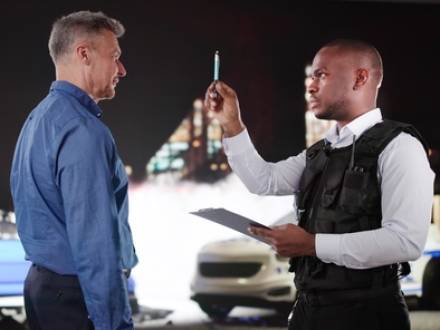 If you were arrested for DUI in Maryland after failing a field sobriety test, you may feel like the evidence against you is solid and that there is not much you can do. That is not necessarily true. Field sobriety tests are far less reliable than most people realize, and the way they are administered matters just as much as the results. When officers make mistakes during these tests or when outside factors affect your performance, the results can be challenged in court. If you are facing charges in 2026, our Northern Baltimore County DUI defense lawyer can help.
In Maryland, DUI charges are governed by Md. Code, Transportation Section 21-902, which makes it illegal to drive while under the influence of alcohol or while impaired. Police often use field sobriety tests to establish probable cause to arrest you, even before a breath or blood test is administered. That means the validity of those roadside tests can directly affect whether your arrest was lawful in the first place.
What Mistakes Do Officers Make When Giving Field Sobriety Tests?
Officer mistakes are where many DUI defenses begin. NHTSA makes clear that if these tests are not administered exactly as the protocol requires, the results are not scientifically valid. Officers make procedural mistakes more often than prosecutors would like juries to know.
What Mistakes Are Made During the HGN Test?
The Horizontal Gaze Nystagmus (HGN) test is when an officer moves a pen or finger in front of your eyes and watches for involuntary jerking. The officer must hold the stimulus object at exactly the right distance from your face. This is typically 12 to 15 inches. Then, they have to move it at the correct speed, make the correct number of passes, and observe each eye in the correct sequence. The test must be administered according to strict timing and procedural requirements.
Common mistakes include moving the object too quickly, holding it too close or too far from your face, conducting fewer passes than required, failing to check for equal tracking in both eyes, and not giving proper instructions before starting. Any one of these errors can make the results unreliable.
What Mistakes Are Made During the Walk and Turn Test?
The Walk and Turn test asks you to take nine heel-to-toe steps in a straight line, turn, and walk back the same way. This test must be performed on a dry, level, and hard surface with enough room for nine full steps. The officer is required to demonstrate the test before asking you to perform it and must give specific verbal instructions in a specific order.
Mistakes that can undermine this test include failing to demonstrate the steps or not providing a clearly marked line for you to walk on. Choosing an uneven or sloped surface and giving confusing or incomplete instructions can also affect the results. Additionally, incorrectly scoring clues can further weaken the test’s reliability. If you were tested on a gravel shoulder, a sloped road, or in low lighting, those are conditions that NHTSA specifically identifies as compromising the test's reliability.
What Mistakes Are Made During the One Leg Stand Test?
The One Leg Stand test requires you to hold one foot off the ground for 30 seconds while counting aloud. The officer must demonstrate the stance before you perform it, give specific instructions, and time exactly 30 seconds. Clues are only valid if the officer observes them correctly during that timed window.
Common problems include failing to demonstrate the test or not timing it correctly, as well as giving the test in windy conditions. The test can also be unreliable if administered to someone over 65, with a leg or back injury, or substantially above average weight. NHTSA acknowledges that these factors independently affect balance and can cause someone to appear impaired when they are not.
How Can a Defense Attorney Use Officer Mistakes During Field Sobriety Testing?
An experienced DUI defense attorney will request the officer's training records, dashcam and body camera footage, and the arrest report. They will also obtain all documentation related to the administration of your field sobriety tests. They will compare every step the officer took against what the protocol actually requires.
If the tests were given incorrectly, your attorney can file a motion to suppress the results. Under Maryland law, if the field sobriety test was used to establish probable cause for your arrest and that evidence is thrown out, the arrest itself may be called into question. Without valid probable cause, the prosecution’s case may be significantly weakened.
Maryland courts scrutinize how field sobriety tests are administered. The dashcam footage from your stop is one of the most valuable pieces of evidence in any DUI case, and it needs to be preserved quickly before it is overwritten.
Schedule a Free Consultation With Our Harford County, MD DUI Defense Lawyer
A failed field sobriety test can feel like the end of your case, but it may be far from the whole story. The Northern Baltimore County DUI defense attorney at Baltimore Legal Services will carefully review how your tests were administered, what conditions you faced, and whether the officer followed proper protocol at every step. He has more than 15 years of experience helping over 10,000 clients. Call 858-523-8423 today to get started. We are available 24/7.
Get the experienced defense you need in your criminal case.
When your life and your future are on the line, you do not want to take any risks. Baltimore Legal Services can help you determine your best options for defense, and we can guide you through the legal process while advocating for your rights. Contact us today.

Calls Answered 24/7
Do not talk to police officers until you consult with our attorney.

Free Initial Consultation
Call 858-523-8423 today to speak with Attorney O'Brien.
Contact Us - Your Life Depends on it!

 CALL US
 TEXT US
 EMAIL US