
FREE CONSULTATIONS
8585-ADVICE


Are Geofence Warrants Legal in Maryland Criminal Cases?
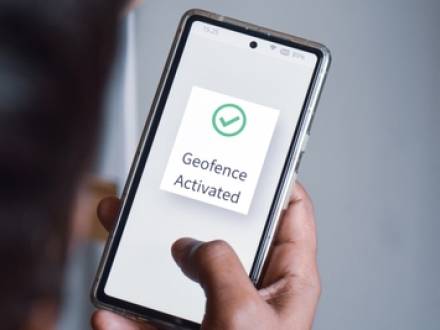 A shift is quietly taking place in Maryland law enforcement as detectives increasingly turn to geofence warrants, which are broad digital sweeps that compel tech companies like Google to identify the owner of each electronic device near a crime scene. As you might imagine, a geofence warrant can pull in dozens of innocent people who happened to be in the wrong place at the wrong time.
Imagine jogging past an apartment complex early in the morning, or waiting at a bus stop, completely unaware that your phone has just been identified as being within a specific radius of a criminal offense. As with many technological advances, the law has not kept pace with geofence warrants. Courts in Maryland have yet to create a "rulebook" governing these warrants, which has created challenges.
Attorneys in the state are questioning whether these warrants violate Article 26 of the Maryland Constitution, as they reflect the "general" warrants the Founders fought to eliminate. In short, geofence warrants have the potential to constitute government overreach and sweep up innocent people. If you are facing police questioning under a geofence warrant, the sooner you speak to an experienced criminal defense attorney in Northern Baltimore County, MD, the better outcome you are likely to have.
What is Geofence Data and How Does Law Enforcement Obtain It?
A traditional search warrant starts with a suspect. Geofence warrants reverse that process, starting with a location and requiring tech companies to identify all devices that were in the area around the time a crime was committed. The police establish a crime scene radius, then define the location of the "fence." The provider then identifies all devices within that zone.
Police may request additional "layers" of data, including the subscriber’s information and his or her movement history during the timeline. The primary providers are Google, Apple, and other app-based companies. Law enforcement favors geofence warrants when they are unable to identify a suspect or when they need to reconstruct movements around carjackings, burglaries, or shootings.
Why Are Geofence Warrants Constitutionally Controversial?
The Fourth Amendment requires probable cause for a warrant, yet geofence warrants collect information about those who might have just been in the wrong place at the wrong time. Trial-level judges in Maryland have begun questioning whether geofence warrants are overly broad, although no appellate cases have yet addressed the issue. A major case originating in Virginia (United States v. Chatrie) questioned the breadth and particularity of geofence warrants.
Maryland police have increasingly used geofence warrants in urban jurisdictions like Baltimore City, Prince George’s, and Montgomery County for armed robberies, hit-and-runs, and shootings. In suburban areas of the state, geofence warrants are being used in neighborhood break-ins, catalytic converter theft rings, and package thefts. Unfortunately, there are bound to be false positives in areas with apartment complexes or commercial areas.
How Can a Criminal Defense Lawyer Challenge Geofence "Evidence?"
A criminal defense attorney can challenge the "evidence" produced by the geofence warrant by arguing that the geographic radius was too large, the time window was overly broad, or the police did not fully justify why every device in the area was potentially linked to the crime. There is an inherent lack of probable cause with geofence warrants, as they rely on speculation rather than evidence tied to a specific person.
The reliability of the data can often be challenged, as GPS "drift" can place a device inside a fence even when the person was not physically in that specific area. Smartphones sometimes "ping" locations inaccurately when switching between Wi-Fi points or cell towers. A Maryland attorney may also move to suppress evidence obtained under a geofence warrant under Article 26 of the Maryland Constitution.
Contact a Harford County, MD Criminal Defense Lawyer
If you have been charged with a Maryland crime based on identification under a geofence warrant, you may have strong grounds to challenge the investigation. A highly skilled Northern Baltimore County felony crimes attorney from Baltimore Legal Services can review the warrant and pursue suppression if your rights were violated. Our attorneys are available 24/7 and will aggressively defend your charges. We have helped more than 10,000 clients and offer a custom flat fee. To schedule your free consultation, call 858-523-8423.
Get the experienced defense you need in your criminal case.
When your life and your future are on the line, you do not want to take any risks. Baltimore Legal Services can help you determine your best options for defense, and we can guide you through the legal process while advocating for your rights. Contact us today.

Calls Answered 24/7
Do not talk to police officers until you consult with our attorney.

Free Initial Consultation
Call 858-523-8423 today to speak with Attorney O'Brien.
Contact Us - Your Life Depends on it!

 CALL US
 TEXT US
 EMAIL US